
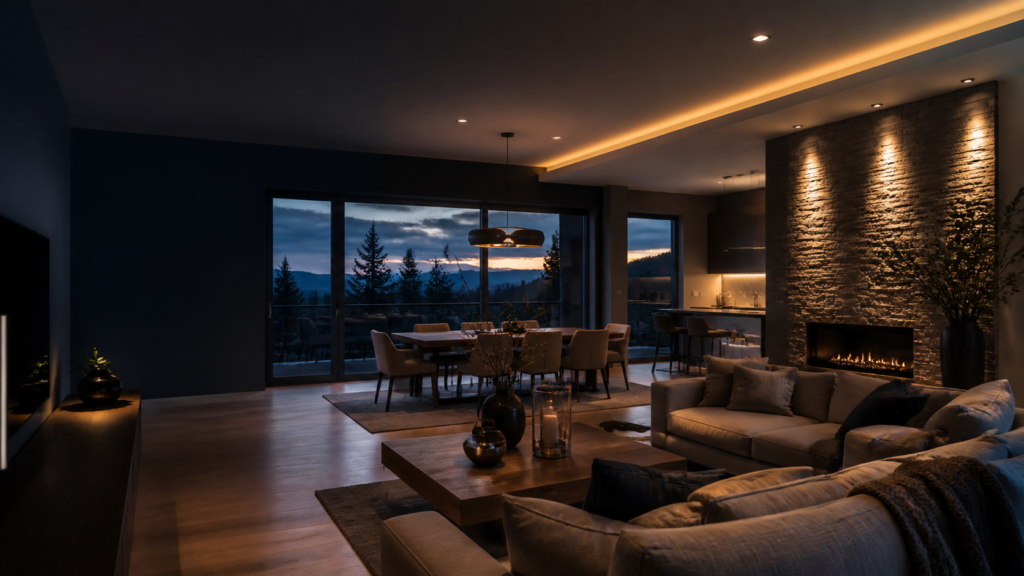
Good lighting is planned around how a room is used, then supported with efficient fixtures, compatible controls, and electrical work that is built to last.
Start with layers, not one central fixture
A well-lit room usually has more than one job to do. Ambient lighting provides the general level of light. Task lighting makes specific work easier, such as preparing meals, reading, or working at a desk. Accent lighting can add depth to millwork, artwork, or an architectural feature.
Planning these layers together prevents dark work areas and harsh contrast. In a kitchen, that may mean recessed or surface-mounted ambient lighting, focused light over counters, and a separate setting for a dining area. In a living room, lamps, wall lighting, or cove lighting can make the space more comfortable after the brighter daytime setting is no longer needed.

Choose LEDs and controls together
LED fixtures use less electricity than older lighting technologies and can offer useful control over colour temperature, beam spread, and brightness. The fixture is only part of the decision. A dimmer, driver, bulb, and smart control need to be compatible with one another for reliable operation.
- Use warmer light in bedrooms and relaxed living spaces when that suits the finish palette and the way the room is used.
- Use clear, functional light for prep areas, bathrooms, stairs, and work surfaces.
- Put frequently used lighting groups on separate controls so you can adjust the room without turning on every fixture.
Use dimmers and smart controls with a clear purpose
Dimmers can make a room more flexible and may reduce energy use when lights are not run at full output. Before choosing one, confirm that it is rated for the lamp or LED driver being used. A mismatched dimmer can cause flickering, delayed response, limited dimming range, or audible noise.
Smart switches and automated schedules can be useful for exterior lights, entry areas, and routines that benefit from a predictable setting. They work best when the electrical box, wiring, Wi-Fi coverage, and device compatibility are considered before installation. For a renovation, it is often worth deciding which locations need neutral conductors, extra switch legs, or future low-voltage pathways while walls are open.
Plan exterior lighting for visibility and comfort
Exterior lighting should help people move safely around entries, walkways, decks, garages, and service areas without spilling unnecessary light into neighbouring properties. Shielded fixtures, sensible mounting heights, timers, photocells, and motion sensors can all help. Lighting near wet locations must be selected and installed for its environment.
Bring in an electrician when wiring needs to change
Replacing a compatible lamp is different from changing a circuit, adding a fixture location, opening a junction box, or installing new controls. An electrical contractor can assess circuit capacity, switch locations, box fill, fixture support, and the protection required for the location. This is especially important in older homes or renovations where existing wiring may not suit the new plan.
For Maple Ridge homeowners, a lighting plan is most useful when it is part of the larger renovation conversation. Deciding on fixture locations, control zones, and future needs early gives the electrical work a clear path before finishes are in place.
Planning a lighting update?
Talk with DSC Electric about practical lighting, controls, and electrical work for your home.